If you're comparing DTF printing vs DTG printing for your next batch of custom t-shirts, you're really choosing between two very different digital printing technologies that both promise "photo-quality" results but behave completely differently on the shop floor. At Print Hungama, we run both processes side by side every week, and this guide breaks down exactly how they differ on hand-feel, wash durability, fabric compatibility, cost, turnaround, minimum order and colour vibrancy — so you can pick the right one for your order instead of guessing.
DTF Printing vs DTG Printing: The Core Difference
Both methods print your artwork digitally, without screens or plates, which is why they're often lumped together. But the mechanics — and the results — are quite different.
What Is DTF Printing?
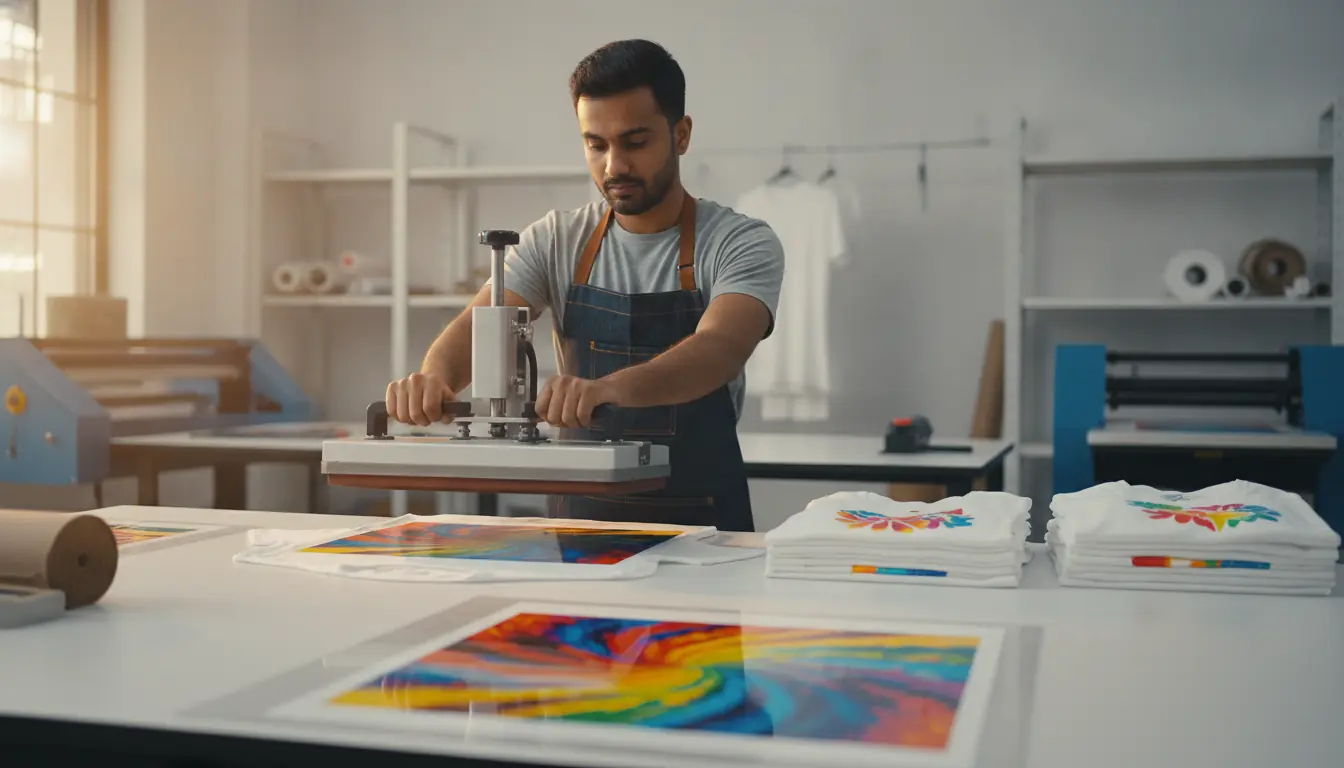
DTF printing (Direct-to-Film) prints your design onto a special PET film using CMYK inks, then flood-coats a white ink layer behind it, dusts the wet ink with a hot-melt adhesive powder, and cures it in an oven. The result is a flexible, ready-to-press transfer that can be heat-pressed onto almost any fabric — cotton, polyester, blends, nylon, even leather — in seconds. Because the print is built on film first and transferred later, DTF separates the printing step from the garment entirely, which is what gives it so much flexibility.
What Is DTG Printing?
DTG printing (Direct-to-Garment) works more like a large inkjet printer for clothing. The garment is loaded onto a flat platen, pre-treated with a chemical solution (especially for dark fabrics), and printed on directly with water-based inks that soak into the fibres. There's no film and no transfer step — the printer lays ink straight onto the shirt, which is then cured under heat. This makes DTG feel less like a print sitting on the fabric and more like the ink has become part of the fabric.
Print Hand-Feel: Soft-Touch vs Sitting on the Fabric
Hand-feel is usually the first thing customers notice when they pick up a finished garment, and it's one of the sharpest differences between the two processes.
DTG's water-based inks are absorbed into the cotton fibres, so on 100% cotton the print can feel almost invisible to the touch — genuinely soft, with barely any raised texture. This is DTG's strongest selling point.
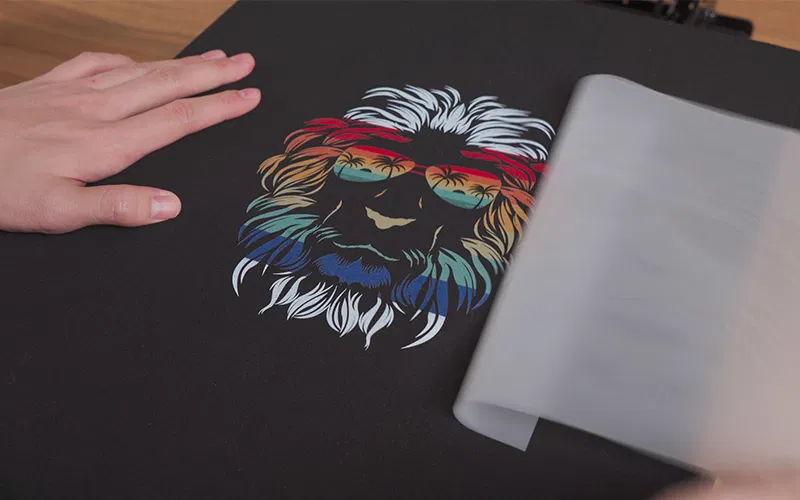
DTF sits as a thin, flexible layer on top of the fabric rather than soaking into it. Modern low-sediment inks and latex TPU hot-melt powders have made this layer thinner and softer than older DTF transfers, and on a well-cured print you'll feel only a slight, smooth texture — nowhere near the thick, rubbery hand of old-school plastisol vinyl. Most customers who compare a current-generation DTF print against a DTG print side by side call the difference marginal, not dramatic — but if silky-soft hand-feel is your single biggest priority on plain cotton tees, DTG still has a slight edge.
Wash Durability: How Many Washes Before It Fades?
This is where the gap opens up. DTF prints are lab- and field-tested at Print Hungama for 50+ wash cycles without cracking, peeling or fading, because the hot-melt adhesive creates a genuine mechanical bond with the fabric surface, and the powder-coated film resists the flexing and abrasion of a normal wash-and-dry cycle.
DTG prints, because the ink is absorbed rather than bonded, are far more sensitive to wash care. Water-based DTG ink can noticeably dull, crack at stress points, or fade within 20-25 washes if the garment is washed in hot water, tumble-dried on high heat, or ironed directly over the print. Get the wash care right (cold wash, inside-out, air dry) and DTG holds up reasonably well — but it simply doesn't have the same margin for error that DTF does. For workwear, activewear, and anything that's going to see a washing machine every week for a year, DTF's durability advantage is significant.
Fabric Compatibility: Cotton, Polyester, Blends and Dark Garments
DTG is fundamentally a cotton technology. It performs best on 100% cotton or high-cotton blends because that's what its water-based inks are formulated to absorb into. Try it on 100% polyester, nylon, or a poly-blend activewear fabric and results get inconsistent — the ink sits on the surface instead of soaking in, cracks faster, and colours can look washed out.
DTF doesn't care what the garment is made of. Because the design is built on film and heat-pressed on afterwards, the same transfer works on cotton, polyester, poly-cotton blends, nylon, caps, bags, and even non-fabric surfaces like leather patches. If your product range spans t-shirts, hoodies, sports jerseys and tote bags, DTF lets you use one process across the entire catalogue instead of switching machines for different fabrics.
Cost Per Print: Per-Piece Economics Compared
DTG machines and inks are expensive to run — pre-treatment solution, platen changeovers and slower print speeds all add up, so DTG is typically priced per garment regardless of design size, and the cost per piece stays roughly flat whether you order 1 shirt or 50. It rarely gets cheaper at volume the way screen printing or bulk DTF gang-sheets do.
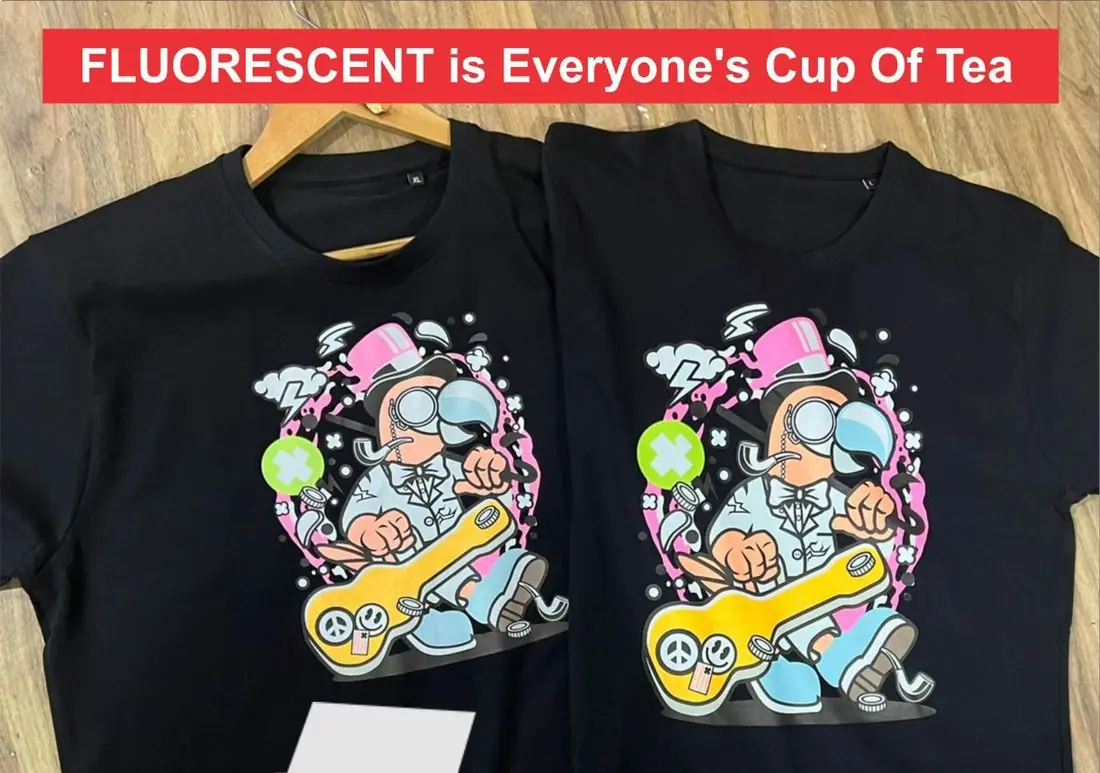
DTF pricing scales with the size of the design and the length of film used, and gets meaningfully cheaper per piece as you print more designs onto a single gang sheet. A small chest logo can cost a fraction of a full-back print, and running multiple designs together on one metre of film brings the effective cost per shirt down further. For most small and mid-size orders — the kind Print Hungama processes daily — DTF works out cheaper per print, especially once you're ordering more than a handful of pieces.
Turnaround Time and Minimum Order Quantity
DTG's biggest advantage on paper is that it can print a single, ready-to-wear shirt from start to finish with zero setup — genuinely one-piece, on-demand production with no minimum order at all.
DTF also has no minimum order — you can order 1 metre of transfers or 1,000 — but there's an extra step: the printed film has to be heat-pressed onto the garment, either by you or by us. Because Print Hungama keeps DTF transfers ready-stocked and dispatches same-day for orders placed before 12 PM, the practical turnaround difference for small orders is minimal, and DTF pulls ahead as soon as an order needs more than a few pieces, since one gang sheet can carry dozens of designs pressed back-to-back.
Colour Vibrancy and White-Ink Opacity
Both processes use a white ink under-base to print on dark or coloured garments, but they behave differently. DTG's white ink is laid down thin so the print stays soft, which means opacity on black or navy fabric can be inconsistent — designs sometimes look slightly grey or need a second white pass, adding time and cost.
DTF's white ink is flood-printed as a solid backing layer on the film itself, so opacity on black, navy or any dark fabric is dense and consistent every time, with no see-through patches. Combined with premium imported CMYK inks, DTF typically produces brighter, punchier colour and sharper fine detail — gradients, small text and photographic artwork all hold up better straight off the press. If your design has to pop on a black hoodie, DTF has the clear edge.
Artwork and Design Files: What Each Process Needs
The prep work behind the scenes also differs. DTG prints straight from a high-resolution PNG or PSD with a transparent background — send us your file and it goes almost straight to the printer, since there's no film, no weeding and no pressing step to plan around. This is part of why DTG feels so effortless for true one-off, single-piece orders.
DTF needs a little more planning, but it pays off at scale. Because the design is printed onto film and then arranged on a gang sheet before pressing, multiple logos, jersey names or full artworks can be laid out together to make the most of every metre of film — something our in-house team handles for you at no extra cost. It also means small edits, resizes or colour tweaks between orders don't require touching a garment at all, since everything happens on the film first.
DTF vs DTG at a Glance
| Factor | DTF Printing | DTG Printing |
|---|---|---|
| Hand-feel | Thin, flexible, smooth | Softest — ink absorbs into fabric |
| Wash durability | 50+ washes, resists cracking | ~20-25 washes, sensitive to hot wash/dry |
| Fabric compatibility | Cotton, poly, blends, nylon, bags, leather | Best on 100% cotton / cotton-rich blends |
| Cost per print | Cheaper at volume, scales with design size | Flat per garment, doesn't drop much at volume |
| Turnaround | Same-day dispatch, no minimum | On-demand single piece, no minimum |
| Minimum order | 1 piece to 1,000+ | 1 piece to 1,000+ |
| Colour vibrancy | Bright, punchy, consistent on dark fabric | Good on cotton, can look muted on synthetics |
| White-ink opacity | Dense, solid, consistent | Thinner, can look patchy on dark fabric |
When DTG Printing Still Makes Sense
DTF isn't the answer for every single order, and we'd rather tell you that upfront than oversell you. If you need a single 100% cotton t-shirt with a soft, barely-there hand-feel and you're not worried about heavy wash-and-wear durability — a one-off gift, a sample, a photo print for personal use — DTG can give you a lovely, lightweight result with genuinely minimal setup. It also remains a strong option for full all-over photographic prints on plain cotton where "you can't feel the print at all" matters more than long-term wash durability.
How to Wash and Care for DTF and DTG Prints
How long a print survives is only half your control — the rest is care. Both DTF and DTG last far longer when you wash them gently. Turn the garment inside out, use cold water on a gentle cycle, and skip harsh bleach or heavy detergents. Tumble dry on low or, better still, line dry in the shade. Never iron directly over a print — press from the inside, or place a thin cloth over the design.
DTF is the more forgiving of the two in everyday use: its flexible ink-and-adhesive layer takes machine washing in its stride, which is exactly why we recommend it for school uniforms, sports jerseys and workwear that get washed constantly. DTG's softer, absorbed print is beautiful but fades a little sooner on dark fabrics, so it rewards extra-gentle care.
DTF vs DTG for Businesses, Resellers and Bulk Orders
If you're printing to sell — brand merchandise, event tees, a clothing label, or a print-on-demand store — the maths usually points to DTF. You can hold ready-to-press transfers in stock, print one piece or a thousand from the same setup, and decorate cotton, polyester and blends without switching processes. That flexibility keeps your minimums low and your catalogue wide, which is hard to match with DTG's cotton-first, one-garment-at-a-time workflow.
Thinking of bringing DTF in-house or buying transfers in bulk? Our sister brand dtgdtf.com supplies ready-to-press DTF transfers pan-India and a full range of DTF printers, inks, PET film and hot-melt powder — the same machines and materials we run at Print Hungama.
DTF vs DTG Printing: Frequently Asked Questions
Is DTF printing better than DTG printing?
For most custom t-shirt orders, yes. DTF prints on almost any fabric, gives brighter and more durable results, needs no pre-treatment, and stays cost-effective for small and bulk orders. DTG still wins for an ultra-soft hand-feel on 100% cotton one-offs.
Do DTF prints crack or peel over time?
A properly cured, correctly heat-pressed DTF transfer stays flexible and survives 50+ wash cycles without cracking or peeling. Cracking usually comes from under-curing or a poor press — which is why we control every step in-house.
Which lasts longer in the wash, DTF or DTG?
DTF. It bonds a durable ink-and-adhesive layer to the fabric, so it typically outlasts DTG, whose water-based inks can fade faster with repeated washing, especially on dark garments.
Is DTF cheaper than DTG?
For dark fabrics and multi-colour designs DTF is usually cheaper because it skips pre-treatment and heavy white-underbase passes. DTG can be competitive for a single light-cotton piece, but DTF scales better as quantity grows.
Can DTF print on polyester, nylon and dark shirts?
Yes. DTF works on cotton, polyester, blends, nylon and even leather, in any colour, with opaque white ink that keeps colours vivid on black and dark garments — something DTG struggles with.
How should I wash a DTF-printed t-shirt?
Turn it inside out, wash cold on a gentle cycle, avoid harsh bleach, and tumble dry low or line dry. Don't iron directly over the print. Do this and a DTF print easily lasts the life of the shirt.
See What Else You Can Print With DTF
DTF isn't just for t-shirts. Because the artwork is built on a transfer film first, the very same process prints beautifully on hoodies, caps, tote bags, sportswear, workwear, aprons and more. This short video from our sister brand walks through the full range of products you can decorate with Direct-to-Film transfers:
Want to order ready-to-press DTF transfers online, or set up your own DTF printing line? Our sister brand dtgdtf.com ships custom DTF transfers pan-India and stocks DTF printers, inks, PET film and hot-melt powder — everything you see in the video above.
Our Verdict: Why We Recommend DTF for Most Print Hungama Orders
Weigh the two side by side — durability, fabric range, cost at volume and colour punch on dark garments — and DTF printing comes out ahead for the vast majority of orders we see: corporate uniforms, sports jerseys, event merchandise, brand launches and everyday custom tees. It survives real-world washing, works across your entire product range instead of just cotton, and gets cheaper as your order grows.
That said, printing is rarely one-size-fits-all. For bulk solid-colour runs above a few hundred pieces, screen printing can still be the more economical choice, and for names, numbers and single-colour jersey graphics, vinyl transfer is fast and durable. If your project is corporate uniforms or polos, embroidery adds a premium, textured finish that no print method can replicate.
Not sure which process fits your fabric, budget and quantity? Get a quote from our team and we'll recommend the right method — honestly, even if that means pointing you away from DTF.